
07/15/2026
The world's largest container shipping companies just rewrote the rules of global trade. New alliances, 24,000-TEU megaships, and Red Sea disruptions are reshaping freight rates in 2026. This report ranks the top 20 carriers by fleet capacity, market share, and decarbonization strategy, using Alphaliner data and financial filings, plus a full FAQ for importers and exporters.
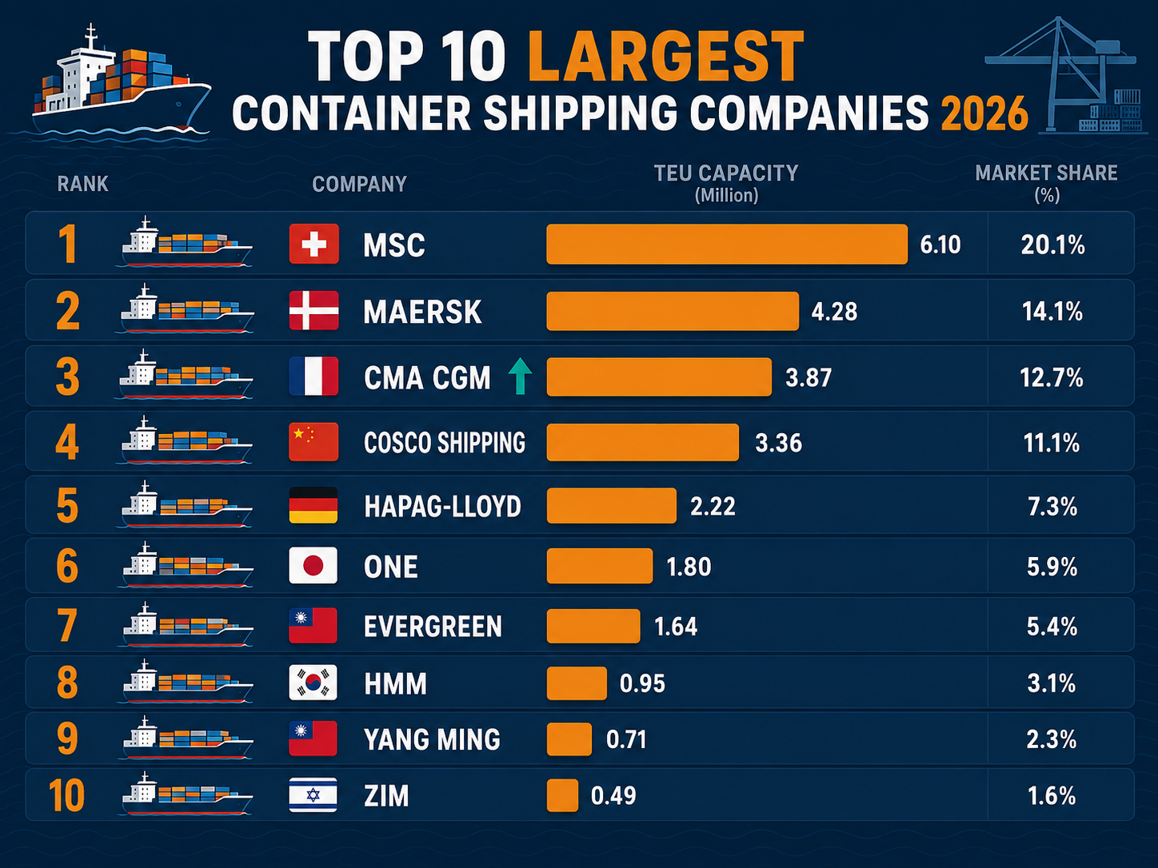
Data compiled from Alphaliner Top 100 (April 2026) and public carrier financial disclosures.
MSC is the largest container shipping company in the world by fleet capacity and, in April 2026, became the first carrier in industry history to operate a fleet of 1,000 vessels. Privately owned by the Aponte-Diamant family, MSC operates independently of any formal alliance, giving it full control over scheduling and routing. Founded in Naples in 1970 by sea captain Gianluigi Aponte and his wife Rafaela Aponte-Diamant, the company relocated its headquarters to Geneva in 1978 and spent decades as the industry's "eternal number two" behind Maersk before an aggressive expansion strategy (2015–2025) propelled it past Maersk in January 2022, for the first time since 1996.
Key Data:
Technology & Sustainability: Digital booking platforms plus expansion into adjacent logistics technology; ~2.05 million TEU dual-fuel orderbook aimed at modernizing an aging fleet; growing MSC Air Cargo and Terminal Investment Limited (TiL) port network.
Challenges & Outlook: Requires a large-scale fleet renewal program; faces rising regulatory attention over market dominance; expected to retain the number one position through at least 2030 given its scale advantage, with focus shifting toward modernization and port/logistics infrastructure expansion.
Interesting Facts:

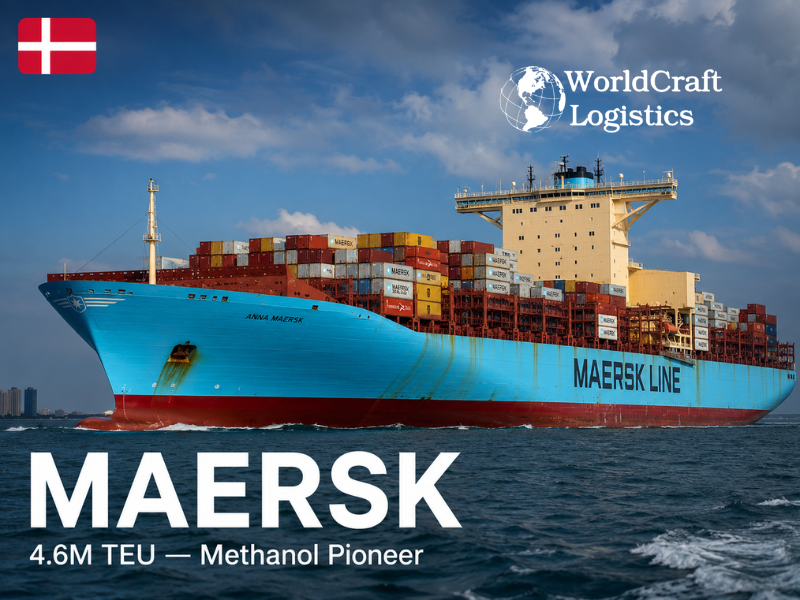
Maersk held the world's number one position for decades before MSC overtook it in January 2022. Founded in Denmark in 1904 by Arnold Peter Møller, Maersk has since repositioned itself as an end-to-end logistics integrator, combining ocean freight with air cargo, inland warehousing, and door-to-door services. Its most significant recent move was dissolving the decade-long 2M alliance with MSC in favor of the Gemini Cooperation with Hapag-Lloyd, launched February 1, 2025.
Key Data:
Technology & Sustainability: Heavy investment in digital freight platforms and supply chain visibility tools; industry leader in green methanol, operating the Ane Mærsk-class (16,000 TEU) and the Laura Maersk, the world's first methanol-capable feeder vessel; net-zero target of 2040, ahead of most peers.
Challenges & Outlook: Cost pressure from rerouting and network startup; CMA CGM closing the capacity gap. Strategy centers on defending second place through Gemini's reliability edge and integrated logistics model, even as CMA CGM targets an overtake by 2027.
Interesting Facts:
CMA CGM was the fastest-growing carrier among the top 10 in the first half of 2026. Founded in 1978 by Jacques Saadé, the company originated from Compagnie Maritime d'Affrètement before merging with Compagnie Générale Maritime. Following Jacques Saadé's passing, his son Rodolphe Saadé took over, pursuing aggressive expansion, including the acquisition of Bolloré's African logistics network, and transforming CMA CGM into an integrated logistics, media, and technology conglomerate.
Key Data:
Technology & Sustainability: Diversified into logistics technology, media, and telecom, reducing dependence on freight rate cycles; ~USD 15 billion invested in fleet decarbonization, targeting ~120 decarbonized-fuel-capable vessels by 2028; 2026 additions include the LNG-powered flagship CMA CGM Notre Dame (~24,212 TEU), the LNG-powered Grand Palais (~23,872 TEU), and ten methanol-powered vessels (13,130–16,180 TEU); net-zero target of 2050.
Challenges & Outlook: Overtaking Maersk requires sustained capital deployment amid industry overcapacity risk; positioned as the most likely challenger for second place, with a possible overtake between late 2027 and mid-2027 per analyst projections.
Interesting Facts:

COSCO Shipping Lines is one of the largest state-backed container carriers in the world, formed in 2016 through the merger of COSCO and China Shipping Group. Analysts, including Xeneta's Peter Sand, consider COSCO the most likely carrier to eventually overtake Maersk for third place globally.
Key Data:
Technology & Sustainability: Investment in smart port technology and digital logistics platforms, supported by China's national port automation program; one of the industry's largest newbuilding orderbooks, with growing LNG-capable and energy-efficient vessel designs.
Challenges & Outlook: Faces geopolitical headwinds but benefits from state backing that enables expansion independent of short-term profit cycles, positioning it as the strongest long-term challenger for third place globally.
Interesting Facts:

Hapag-Lloyd carries more than 175 years of German maritime heritage, formed in 1970 from the merger of Hapag (1847) and Norddeutscher Lloyd (1857). Its most consequential recent decision was exiting THE Alliance to co-found the Gemini Cooperation with Maersk, launched February 1, 2025.
Key Data:
Technology & Sustainability: Expanded into terminal operations via Hanseatic Global Terminals; net-zero target of 2045, one of the most aggressive in the industry, ahead of the broader IMO 2050 deadline.
Challenges & Outlook: Cost pressure from rerouting persists; brand positioning around reliability and Gemini's strong on-time performance expected to remain the core competitive differentiator through the decade.
Interesting Facts:

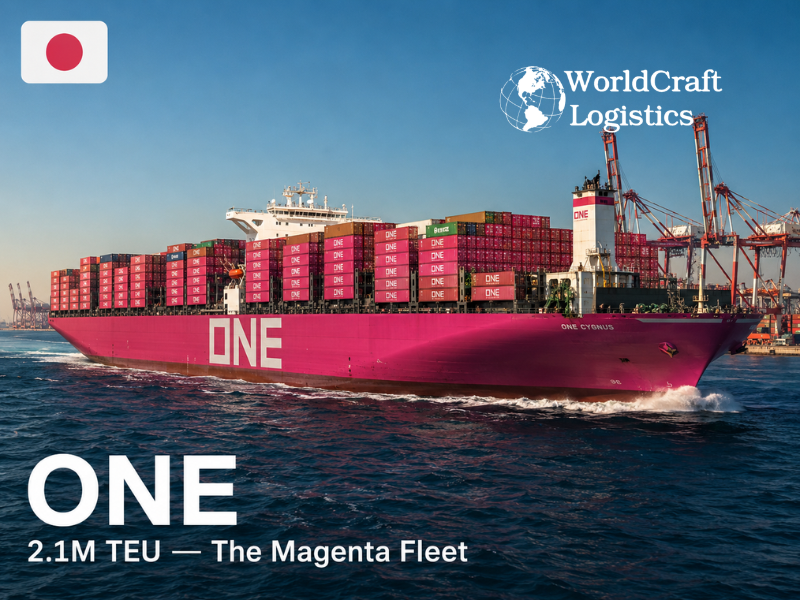
ONE was created in 2017 (operations began April 2018) by consolidating the container divisions of three major Japanese carriers: NYK Line, MOL, and K Line one of the most significant consolidation moves in Japanese shipping history. Instantly recognizable by its magenta livery, ONE operates from its Singapore headquarters.
Key Data:
Technology & Sustainability: Automated booking and vessel optimization from its centralized Singapore hub, supporting fast documentation and competitive intra-Asia/Transpacific pricing; coordinated fleet modernization planning with Premier Alliance partners HMM and Yang Ming.
Challenges & Outlook: Balancing three-party strategic alignment while competing against larger carriers; centralized Singapore model and brand strength expected to sustain mid-tier global competitiveness within Premier Alliance.
Interesting Facts:
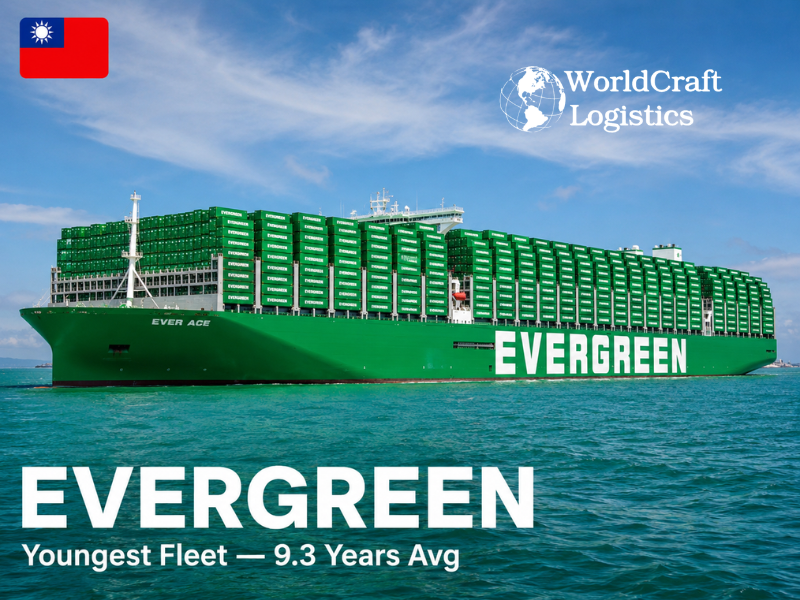
Evergreen holds the youngest average fleet age among top-tier global carriers. Founded in 1968 by Chang Yung-fa, starting with a single bulk cargo vessel, Evergreen grew into one of the most recognizable brands in shipping through its distinctive green livery. The company drew global attention in 2021 when its chartered vessel Ever Given ran aground in the Suez Canal, blocking the waterway for several days.
Key Data:
Technology & Sustainability: Youngest average fleet age (~9.3 years) delivers fuel efficiency, fewer maintenance delays, and lower environmental surcharge exposure; large newbuilding orderbook signals continued modernization.
Challenges & Outlook: Managing brand perception post-Ever Given while expanding onshore logistics; young fleet profile positions Evergreen well for fuel-efficiency-driven cost advantages as decarbonization regulation tightens.
Interesting Facts:
HMM recently crossed the critical 1 million TEU threshold, operating a modern fleet of ultra-large container vessels (ULCVs) optimized for fuel efficiency. Originally founded as Hyundai Merchant Marine in 1976, HMM underwent a severe financial crisis requiring South Korean government-led restructuring before its modern turnaround.
Key Data:
Technology & Sustainability: Modern ULCV fleet structurally optimized to minimize per-slot fuel consumption; digital booking and tracking modernization in coordination with Premier Alliance partners.
Challenges & Outlook: Balancing expansion ambition against historical debt caution; efficient ULCV fleet and state backing position HMM for continued steady growth within Premier Alliance.
Interesting Facts:

Yang Ming focuses strategic investment on targeted cross-strait, regional Asian, and Pan-Pacific trade routes rather than pursuing global blanket coverage. Originating as a Taiwanese state shipping enterprise before being privatized, Yang Ming is one of Taiwan's three major container carriers alongside Evergreen and Wan Hai.
Key Data:
Technology & Sustainability: Investment in operational efficiency and fleet optimization technology within Premier Alliance; newbuilding orders increasingly LNG-capable and energy-efficient.
Challenges & Outlook: Margin exposure to regional rate swings; focused regional strategy expected to preserve niche competitiveness within Premier Alliance without direct scale competition against the top five.
Interesting Facts:

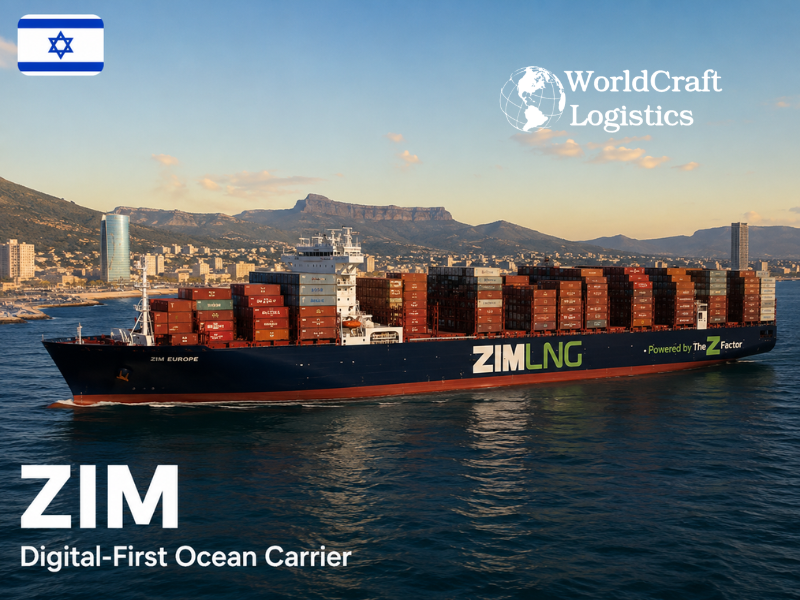
ZIM differentiates itself through a flexible, technology-driven business model, focusing on niche trade lanes with strong margins rather than competing on scale. Established shortly after World War II as Israel's national shipping line, ZIM later transitioned from a state-owned enterprise to a publicly traded company on the New York Stock Exchange.
Key Data:
Technology & Sustainability: Industry-pioneering digital booking platform, a core differentiator for small and mid-sized shipper accounts; early investment in mid-sized LNG-capable vessels, particularly for Transpacific deployment.
Challenges & Outlook: Scale disadvantage limits cost leverage; a technology-driven, niche-focused strategy is expected to sustain ZIM's position as the smallest top-10 carrier, emphasizing digital differentiation over scale.
Interesting Facts:
Worldcraft Logistics provides end-to-end freight forwarding solutions, including ocean freight, air freight, customs brokerage, trucking, warehousing, and global supply chain management. Let our logistics specialists help you simplify international shipping while reducing transit time and overall costs.
Explore Freight Forwarding Services →Source: Alphaliner Top 100, updated April 2026
| Rank | Company | Country | Fleet Size | TEU | Market Share | Alliance | Fleet Age |
|---|---|---|---|---|---|---|---|
| 1 | MSC | Switzerland | 1,000 | 7,318,632 | 21.6% | Independent | ~17 years |
| 2 | Maersk | Denmark | 735 | 4,647,588 | 13.7% | Gemini | Industry average |
| 3 | CMA CGM | France | 723 | 4,273,202 | 12.6% | Ocean Alliance | Young, rapidly modernizing |
| 4 | COSCO Shipping Lines | China | 554 | 3,593,746 | 10.6% | Ocean Alliance | Average |
| 5 | Hapag-Lloyd | Germany | 291 | 2,400,946 | 7.1% | Gemini | Average |
| 6 | Ocean Network Express (ONE) | Japan | 272 | 2,134,872 | 6.3% | Premier Alliance | Average |
| 7 | Evergreen Marine | Taiwan | 239 | 1,973,231 | 5.8% | Ocean Alliance | ~9.3 years (youngest) |
| 8 | HMM | South Korea | 97 | 1,029,773 | 3.0% | Premier Alliance | Young |
| 9 | Yang Ming | Taiwan | 98 | 741,908 | 2.2% | Premier Alliance | Average |
| 10 | ZIM | Israel | 115 | 698,205 | 2.1% | Independent | Average |
| 11 | Wan Hai Lines | Taiwan | 120 | 591,132 | 1.7% | Independent | n/a |
| 12 | Pacific International Lines (PIL) | Singapore | 99 | 442,216 | 1.3% | Independent | n/a |
| 13 | X-Press Feeders | Singapore | 103 | 192,780 | 0.6% | Independent | n/a |
| 14 | SITC International | China | 121 | 187,472 | 0.6% | Independent | n/a |
| 15 | Unifeeder | Denmark | 94 | 165,289 | 0.5% | Independent | n/a |
| 16 | KMTC | South Korea | 65 | 155,914 | 0.5% | Independent | n/a |
| 17 | IRISL Group | Iran | 29 | 142,180 | 0.4% | Independent | n/a |
| 18 | Global Feeder Shipping | UAE | 53 | 131,734 | 0.4% | Independent | n/a |
| 19 | Sinokor Merchant Marine | South Korea | 68 | 120,081 | 0.4% | Independent | n/a |
| 20 | TS Lines | Taiwan | 40 | 106,751 | 0.3% | Independent | n/a |
*Alphaliner tracks fleet age data for the top 10 carriers only; "n/a" indicates data not publicly broken out for ranks 11–20.
Regarding orderbooks, CMA CGM and COSCO stand out with the largest newbuilding programs. MSC maintains an orderbook of approximately 2.05 million TEU concentrated in dual-fuel vessels. On technology and ESG, Maersk and Hapag-Lloyd lead with the earliest net-zero commitments (2040 and 2045, respectively), while Evergreen leads on fleet age efficiency.
1. Fleet size and global capacity
This level of consolidation makes container shipping one of the most concentrated major industries in global trade a near-oligopoly in which a handful of carriers determine pricing, capacity allocation, and route design for the entire global economy.
2. Orderbook and newbuilding trends
2024–2026 has produced one of the largest newbuilding waves in industry history, concentrated in dual-fuel vessels capable of running on methanol or LNG. This has raised concerns about potential overcapacity in 2026–2028, as new tonnage is delivered faster than underlying freight demand is growing.
3. Post-pandemic volatility
Freight rates that spiked several-fold in 2021–2022 later collapsed, forcing carriers to build stronger balance sheets and accelerating the wave of alliance restructuring that defines the market in 2026.
4. Red Sea crisis and rerouting
5. Panama Canal conditions
Operating conditions have stabilized through 2026 following an earlier drought-driven transit slowdown, though geopolitical disputes over port control near the canal remain contentious.
6. Trade war and tariff impact
Tariff shifts between major economies continue to create volatility on the Transpacific lane, accelerating corporate supply chain diversification.
7. Nearshoring and friendshoring
Manufacturers are relocating production closer to end markets or to politically aligned trading partners, gradually reshaping trade lanes historically dominated by Asia–Europe and Transpacific routes.
8. Technology and automation
9. Decarbonization and IMO 2050
The International Maritime Organization has set a target for the shipping industry to reach net-zero emissions by approximately 2050, driving investment in:
The global alliance map was completely redrawn between 2024 and 2025, producing three major coalitions plus one significant independent outlier.
| Alliance | Members | Formed | Combined Capacity | Combined Vessels |
|---|---|---|---|---|
| Gemini Cooperation | Maersk, Hapag-Lloyd | February 2025 | ~3.4–3.7 million TEU | ~290–340 |
| Ocean Alliance | CMA CGM, COSCO Shipping, Evergreen Marine, OOCL | 2016 (10th anniversary in 2026) | ~5.3 million TEU | ~394 |
| Premier Alliance | ONE, HMM, Yang Ming | February 2025 | Varies by service string | N/A |
| Independent | MSC, ZIM | N/A | N/A | N/A |
Role of each alliance: Gemini pursues maximum reliability via a streamlined hub-and-spoke design; Ocean Alliance leverages the largest combined scale for dense East–West coverage; Premier Alliance draws on regional Asian strength despite a smaller footprint; MSC bets on absolute scale and strategic autonomy outside any alliance.
Container shipping is no longer simply a story of massive vessels moving cargo across oceans. It is a story of economic power, adaptability under geopolitical pressure, and a technology race toward a cleaner, smarter, more reliable maritime future.
Mediterranean Shipping Company (MSC) is the world's largest container shipping company in 2026, operating approximately 7,318,632 TEU of fleet capacity and controlling roughly 21.6% of global container shipping capacity.
The 2M Alliance ended because MSC had grown large enough to operate a global network independently after surpassing Maersk in fleet capacity. As a result, the strategic benefits of sharing capacity with a direct competitor diminished, and the alliance officially concluded in January 2025.
Gemini Cooperation is a strategic partnership between Maersk and Hapag-Lloyd, officially launched on February 1, 2025. It uses a hub-and-spoke operating model designed to deliver schedule reliability consistently above 90%.
As of the first half of 2026, CMA CGM recorded the fastest fleet expansion, adding approximately 235,500 TEU, representing about 5.7% growth.
In 2026, MSC operates the world's largest container ships. The MSC Irina and its sister vessels have a nominal capacity of approximately 24,346 TEU, followed closely by Evergreen's Ever Alot at approximately 24,004 TEU.
The world's top 10 container shipping companies collectively control more than 84% of total global container shipping capacity as of 2026.
CMA CGM Chairman and CEO Rodolphe Saadé has publicly stated the goal of surpassing Maersk before the end of 2027. Based on current fleet expansion trends, several industry analysts expect the crossover could occur around mid-2027.

SEO
Digital Marketing/SEO Specialist
Simon Mang is the SEO and Digital Marketing Specialist at Worldcraft Logistics, where he leads content strategy to promote the company's online presence. With years of experience in digital marketing and a strong understanding of the logistics industry, he has published more than 500 specialized articles across freight, warehousing, and supply chain topics. *Reviewed for accuracy by the Worldcraft Logistics Operations Team.
Hot News
08/05/2024

Hot News
02/23/2023

Hot News
02/23/2023
Hot News
02/06/2023

Hot News
02/07/2023